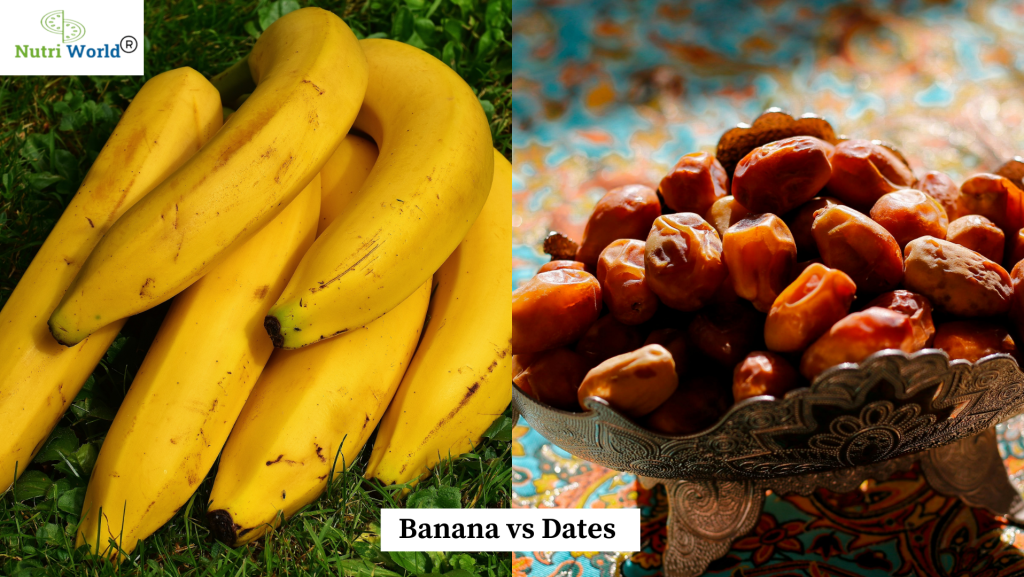
When you need a quick boost of energy—before a workout, during a long workday, or to beat mid-afternoon fatigue—two natural options often top the list: bananas and dates. Both are sweet, convenient, and widely considered “healthy energy foods.” But are they equal? And more importantly, which one is the better energy source for your body and goals?
Let’s break it down scientifically, nutritionally, and practically.
Understanding “Energy” from Food
Energy from food primarily comes from carbohydrates, which the body converts into glucose. However, the quality of energy depends on:
- Type of carbohydrate (simple vs complex)
- Fiber content (affects blood sugar spikes)
- Micronutrients (support metabolism)
- Glycaemic index (GI)
- Portion size and timing
Bananas and dates both provide carbohydrates—but in very different ways.
Nutritional Snapshot (Per 100 g)
| Nutrient | Banana | Dates |
|---|---|---|
| Calories | 116 | 317 |
| Carbohydrates | 27.2 | 75.8 |
| Protein | 1.2 | 1.2 |
| Calcium | 17 | 120 |
| Iron | 0.36 | 7.3 |
| Fat | 0.3 | 0.4 |
Dates are far more calorie- and sugar-dense, while bananas are lighter and more water-rich.
Bananas: The Gentle, Sustained Energy Booster 🍌
Why Bananas Are Popular
Bananas are often called nature’s energy bar—and for good reason.
Key Benefits:
- Balanced Energy Release
Bananas contain a mix of glucose, fructose, and sucrose, along with fiber. This provides steady energy without a sudden sugar crash. - Lower Glycaemic Load
While ripe bananas have a moderate GI, the fiber helps slow sugar absorption—making them safer for blood sugar control than many dried fruits. - Electrolyte Support
High potassium content supports nerve function, muscle contractions, and hydration—ideal for workouts or summer fatigue. - Digestive Friendly
Bananas are easy on the stomach and often recommended during acidity, gastritis, or recovery phases.
Best Use Cases:
- Pre-workout snack (30–60 minutes before)
- Mid-morning or evening fruit
- Energy boost for beginners or sedentary individuals
- People with acidity or sensitive digestion
Limitations:
Bananas are not very calorie-dense, so for endurance athletes or those needing high energy quickly, they may not be enough alone.
Dates: The Power-Packed Instant Energy Bomb 🌴
Dates are often used to break fasts—and there’s science behind that tradition.
Key Benefits
- Instant Energy Release
Dates are extremely rich in natural sugars, making them ideal for quick energy replenishment. - High Mineral Content
They provide potassium, magnesium, iron, and antioxidants that support muscle function and recovery. - Excellent for Fasting & Endurance
Their calorie density makes them useful when food intake is limited but energy demand is high. - Natural Sweetener Alternative
Dates can replace refined sugar in snacks, laddoos, smoothies, and desserts.
Best Use Cases:
- During or after intense workouts
- Breaking a fast (religious or intermittent fasting)
- Endurance sports
- Weight gain or high-calorie diets
Limitations:
Dates can spike blood sugar if eaten in excess—especially for people with diabetes, PCOS, or insulin resistance.
Banana vs Dates: Head-to-Head Comparison
1. Blood Sugar Impact
- Banana: Moderate, more controlled rise
- Dates: Faster spike, especially in large portions
✔ Better for diabetics: Banana (portion-controlled)
2. Energy Timing
- Banana: Sustained, gradual energy
- Dates: Immediate, short-term energy
✔ Best instant fuel: Dates
3. Weight Management
- Banana: Lower calories, more filling
- Dates: Easy to overeat due to high sugar density
✔ Better for fat loss: Banana
4. Workout Performance
- Pre-workout: Banana
- During or post-intense workout: Dates
✔ Depends on intensity and timing
5. Digestibility
- Banana: Easier on gut
- Dates: Can cause bloating if overeaten
✔ Sensitive digestion: Banana
Portion Size Matters More Than the Fruit
A common mistake is comparing one banana to a handful of dates. That’s not equal.
✔ Smart portions:
- 1 medium banana
- 2–3 dates (not 6–8)
Healthiness depends less on the food and more on how much and when you eat it.
So, Which Is the Healthier Energy Source?
The Honest Answer:
It Depends on Your Body and Goal
- Want steady, everyday energy → Banana
- Need quick fuel or calorie boost → Dates
- Managing diabetes or PCOS → Banana (controlled)
- Doing intense workouts or fasting → Dates (limited quantity)
Neither is “bad.” Neither is universally “better.”
Pro Tip: Use Them Together Wisely
For athletes or active individuals:
- Banana + peanut butter
- Banana smoothie with 1 date for sweetness
- Dates post-workout + protein source
This balances instant and sustained energy.
Final Takeaway
Bananas and dates are both natural energy sources—but they serve different purposes.
Think of bananas as slow, steady fuel and dates as fast-acting power.
Choose wisely, portion carefully, and align your choice with your health condition, activity level, and goals—because in nutrition, context is everything.
Frequently Asked Questions (FAQs)
1. Which gives more energy: banana or dates?
Dates provide more instant energy because they are much higher in natural sugars and calories. Bananas offer steady, sustained energy due to their fiber and lower sugar concentration.
2. Are dates healthier than bananas?
Neither is healthier overall. Dates are energy-dense, while bananas are lighter and easier to digest. Healthiness depends on portion size, timing, and individual health goals.
3. Can diabetics eat bananas or dates?
- Bananas: Yes, in moderation (½–1 small banana), preferably with protein or nuts.
- Dates: Limited to 1–2 dates occasionally, as they can spike blood sugar quickly.
Always monitor blood glucose levels.
4. Which is better for weight loss: banana or dates?
Bananas are better for weight loss because they are lower in calories and more filling. Dates should be eaten sparingly due to their high calorie density.
5. Are dates good for pre-workout energy?
Yes, dates are excellent for quick pre-workout or intra-workout energy, especially for high-intensity or endurance exercises.