
In today’s fast-paced lifestyle, we often focus on calories, protein, or weight loss—but one crucial nutrient is still under-consumed by most people: omega-3 fatty acids. These healthy fats play a powerful role in supporting heart function, boosting brain health, and strengthening immunity.
The good news? You don’t need expensive supplements or drastic diet changes. With a few simple, practical food swaps, you can easily increase your omega-3 intake and experience long-term health benefits.
What Are Omega-3 Fatty Acids?
Omega-3s are essential fats, meaning your body cannot produce them on its own—you must get them from food. The three main types are:
- ALA (Alpha-linolenic acid): Found in plant sources like flaxseeds, chia seeds, walnuts
- EPA (Eicosapentaenoic acid): Found mainly in fatty fish
- DHA (Docosahexaenoic acid): Also found in fish and crucial for brain and eye health
While ALA is helpful, EPA and DHA are more biologically active, especially for heart and brain function.

Why Omega-3 Is So Important for Your Body
❤️ Supports Heart Health
Omega-3 fatty acids help:
- Reduce triglyceride levels
- Improve good (HDL) cholesterol
- Lower inflammation
- Support healthy blood pressure
- Reduce the risk of heart disease
Regular intake is linked to a healthier cardiovascular system and improved circulation.
🧠 Boosts Brain Function & Mental Health
DHA is a major structural component of the brain. Adequate omega-3 intake supports:
- Better memory and focus
- Improved learning ability
- Reduced risk of depression and anxiety
- Healthy brain aging
🛡️ Strengthens Immunity
Omega-3s have anti-inflammatory properties, helping regulate immune responses. They may reduce chronic inflammation, support faster recovery, and improve the body’s defense mechanisms.
Simple Ways to Increase Omega-3 Intake Daily
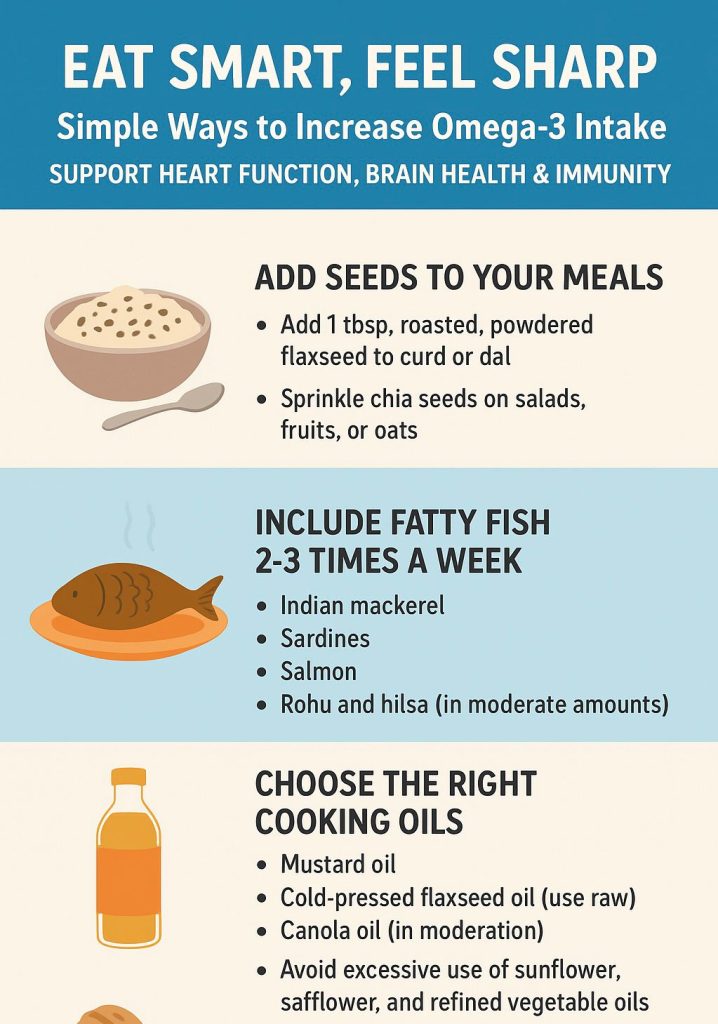
1. Add Seeds to Your Meals (The Easiest Step)
Flaxseeds and chia seeds are affordable, easily available, and rich in ALA.
How to use:
- Add 1 tablespoon of roasted, powdered flaxseed to curd or dal
- Sprinkle chia seeds on salads, fruits, or oats
- Soak 1 tablespoon chia seeds overnight and drink in the morning
💡 Tip: Always consume flaxseeds ground—not whole—for better absorption.
2. Include Fatty Fish 2–3 Times a Week
Fish is the best natural source of EPA and DHA.
- Best options:
- Indian mackerel (bangda)
- Sardines (tarli)
- Salmon
- Rohu and hilsa (moderate amounts)
Healthy cooking methods:
Grilling, steaming, shallow sautéing—avoid deep frying to preserve nutrients.
3. Choose the Right Cooking Oils
Replace refined oils with omega-3-friendly oils.
Better choices:
- Mustard oil (great omega-3 to omega-6 balance)
- Cold-pressed flaxseed oil (use raw, not for cooking)
- Canola oil (in moderation)
Avoid excessive use of sunflower, safflower, and refined vegetable oils, as they are high in omega-6 and may disturb the fat balance.
4. Snack on Walnuts Instead of Fried Foods
Walnuts are one of the few nuts rich in omega-3.
Easy swaps:
- Mid-evening snack: 4–6 walnuts
- Add chopped walnuts to porridge, salads, or smoothies
They support heart health while keeping you full and energized.
5. Add Omega-3-Rich Breakfast Options
Start your day right by including omega-3s early.
Ideas:
- Oats topped with chia seeds and walnuts
- Vegetable omelette cooked in mustard oil
- Smoothie with curd, fruit, and ground flaxseed
Small breakfast changes can make a big difference over time.
6. Don’t Ignore Eggs (If You Eat Them)
Omega-3-enriched eggs contain higher levels of DHA.
Having 3–4 eggs per week can contribute to brain health and protein needs while adding healthy fats.
7. Balance Omega-6 Intake
Most modern diets are overloaded with omega-6 fats from:
- Fried foods
- Bakery items
- Packaged snacks
Too much omega-6 can promote inflammation. Focus on balance, not elimination—reduce processed foods and prioritize whole foods.
8. Consider Supplements—Only If Needed
If you:
- Don’t eat fish
- Are vegetarian or vegan
- Have high triglycerides
You may benefit from fish oil or algae-based omega-3 supplements, but always consult a healthcare professional before starting.
How Much Omega-3 Do You Need?
- Adults: ~250–500 mg EPA + DHA per day
- Plant-based diet: 1–2 tablespoons of mixed seeds daily
Consistency matters more than quantity—small daily habits add up.
Final Thoughts: Small Changes, Powerful Results
Omega-3 fatty acids are not a “trendy” nutrient—they are foundational to long-term health. Whether it’s protecting your heart, sharpening your brain, or strengthening your immunity, omega-3s work silently but powerfully.
You don’t need drastic diet changes. Just:
- Add seeds
- Choose better oils
- Eat fish mindfully
- Reduce processed foods
Simple steps today can lead to stronger health tomorrow.
✨ Remember: Nutrition is not about perfection—it’s about smarter, sustainable choices.
Frequently Asked Questions (FAQs) on Omega-3 Intake
Q1. What are omega-3 fatty acids?
Omega-3 fatty acids are essential healthy fats that the body cannot make on its own. They must be obtained from food and are important for heart health, brain function, and immunity.
Q2. Why is omega-3 important for heart health?
Omega-3 helps reduce inflammation, lower triglycerides, improve cholesterol balance, support healthy blood pressure, and reduce the risk of heart-related diseases.
Q3. Can vegetarians get enough omega-3?
Yes. Vegetarians can get omega-3 from plant sources like flaxseeds, chia seeds, walnuts, and mustard oil. These provide ALA, which the body partially converts into active forms.
Q4. Which foods are the richest sources of omega-3?
Fatty fish like salmon, sardines, and mackerel are the richest sources. Plant-based options include flaxseeds, chia seeds, walnuts, and flaxseed oil.
Q5. How much omega-3 should I consume daily?
Adults generally need about 250–500 mg of EPA + DHA per day. For plant-based diets, consuming 1–2 tablespoons of mixed seeds daily is recommended.

Hi, I’m Dietitian Dipanwita Saha, A Clinical Dietitian & Nutripreneur and The Founder & Director of Nutri World. I believe healthy eating should be enjoyable, balanced, and free from guilt—not about strict rules or cutting out your favorite foods. My passion lies in helping people heal their relationship with food, especially those dealing with disordered eating. If you’re looking for a supportive, judgment-free space to nourish your body and mind, I’m here to help—let’s make food feel good again.