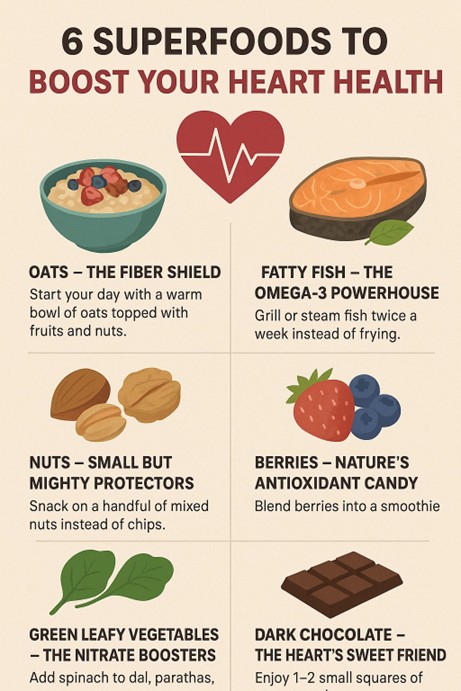

Your heart works tirelessly, pumping blood and nutrients to every cell in your body. Yet, with today’s fast-paced lifestyle, poor diet, and stress, heart problems are on the rise. The good news? Eating the right foods can act as natural medicine for your heart. Here are six science-backed foods that support heart health and simple ways to include them in your daily meals.
1. Oats – The Fiber Shield
Oats are rich in beta-glucan, a type of soluble fiber that helps lower LDL (“bad”) cholesterol. This, in turn, keeps arteries clear and reduces the risk of heart disease.
👉 How to consume:
- Start your day with a warm bowl of oats topped with fruits and nuts.
- Try overnight oats with chia seeds for a quick breakfast.
- Use oats flour to make rotis, cheelas, or pancakes.
2. Fatty Fish – The Omega-3 Powerhouse
Salmon, mackerel, and sardines are loaded with omega-3 fatty acids, which reduce inflammation, lower triglycerides, and support healthy heart rhythms.
👉 How to consume:
- Grill or steam fish twice a week instead of frying.
- Add salmon or tuna chunks to salads.
- For vegetarians, go for flaxseeds, chia seeds, or walnuts as omega-3 alternatives.
3. Nuts – Small but Mighty Protectors
Almonds, walnuts, and pistachios contain healthy fats, fiber, and antioxidants that lower cholesterol and improve artery function.
👉 How to consume:
- Snack on a handful of mixed nuts instead of chips.
- Add chopped walnuts to your salad or smoothie.
- Spread almond butter on multigrain bread.
4. Berries – Nature’s Antioxidant Candy
Blueberries, strawberries, and raspberries are rich in polyphenols and vitamin C, which reduce oxidative stress and improve blood vessel health.
👉 How to consume:
- Blend berries into a smoothie.
- Add them to yogurt or oatmeal.
- Enjoy them as a sweet, guilt-free dessert.
5. Green Leafy Vegetables – The Nitrate Boosters
Spinach, kale, and fenugreek leaves are packed with nitrates that help lower blood pressure and improve blood flow. They also provide magnesium and potassium, crucial for heart rhythm.
👉 How to consume:
- Add spinach to dal, parathas, or curries.
- Make a green smoothie with kale, apple, and cucumber.
- Toss leafy greens into soups or stir-fries.
6. Dark Chocolate – The Heart’s Sweet Friend
Good news for chocolate lovers! Dark chocolate (70% cocoa or more) contains flavonoids that improve circulation, reduce inflammation, and may lower the risk of heart disease.
👉 How to consume:
- Enjoy 1–2 small squares of dark chocolate as a treat.
- Add cocoa powder to smoothies instead of sugary syrups.
- Combine melted dark chocolate with nuts or oats for a healthy snack.
🌿 Quick Tips for a Heart-Healthy Plate
- Use olive oil or mustard oil instead of refined oils.
- Stay hydrated and limit processed, fried, and salty foods.
- Pair these superfoods with regular exercise, stress management, and good sleep.
✅ Bottom Line: Your heart health is in your hands – or rather, on your plate. By including oats, fatty fish, nuts, berries, leafy greens, and even dark chocolate in your meals, you can strengthen your heart naturally and enjoy a healthier, longer life.
FAQs
1. Which superfoods are best for heart health?
The top six are oats, fatty fish, nuts, berries, green leafy vegetables, and dark chocolate. Each of these foods supports cholesterol control, blood pressure management, and better circulation.
2. How often should I eat these heart-healthy foods?
- Oats: Daily (breakfast or snacks).
- Fatty fish: 2–3 times per week.
- Nuts: A small handful (5–7 pieces) daily.
- Berries: 3–4 times a week.
- Leafy greens: Daily in meals.
- Dark chocolate: 1–2 small squares, a few times per week.
3. Can vegetarians and vegans still benefit from these superfoods?
Yes! Vegetarians can swap fatty fish with flaxseeds, chia seeds, or walnuts for omega-3 fats. All other foods on the list are plant-based and heart-friendly.
4. Is it okay to eat dark chocolate every day?
Yes, but in moderation. Choose dark chocolate with at least 70% cocoa and limit to 20–30 grams (1–2 small squares). Too much can add sugar and calories.
5. Do I need supplements if I eat these superfoods regularly?
If your diet is balanced and includes these foods, you may not need supplements. However, people with specific deficiencies (like vitamin D, omega-3, or B12) should consult a doctor or dietitian.
6. Can these foods replace medicines for heart disease?
No. These foods support heart health but should not replace prescribed medications. They work best when combined with medical advice, regular exercise, stress management, and good sleep.
7. Are these foods safe for people with diabetes or thyroid problems?
Yes. Most of them, like oats, nuts, and leafy greens, are beneficial for both conditions. But portion size and preparation methods matter — always consult a dietitian for a personalized plan.

Hi, I’m Dietitian Dipanwita Saha, A Clinical Dietitian & Nutripreneur and The Founder & Director of Nutri World. I believe healthy eating should be enjoyable, balanced, and free from guilt—not about strict rules or cutting out your favorite foods. My passion lies in helping people heal their relationship with food, especially those dealing with disordered eating. If you’re looking for a supportive, judgment-free space to nourish your body and mind, I’m here to help—let’s make food feel good again.