
When it comes to weight loss, breakfast often becomes the most confusing meal of the day—especially in Indian households. Two of the most popular and comforting choices are poha and upma. Both are easy to prepare, affordable, and deeply rooted in Indian food culture. But if your goal is fat loss, better metabolism, and sustained energy, which one truly deserves a place on your plate?
Let’s break down poha vs upma for weight loss—nutritionally, practically, and realistically—so you can make an informed, guilt-free choice.
Understanding the Basics:
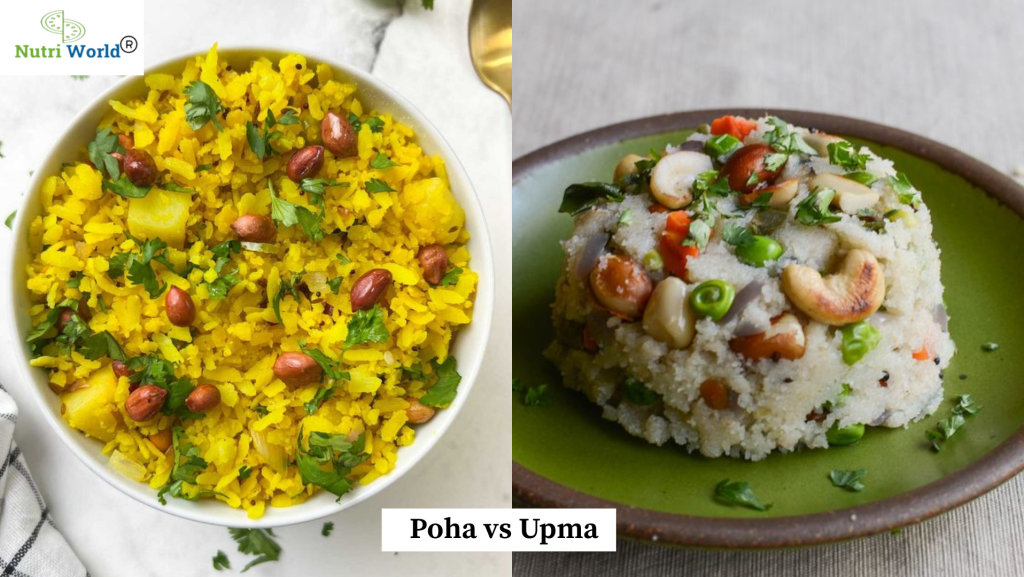
What is Poha?
Poha is made from flattened rice, lightly cooked with mustard seeds, curry leaves, onions, turmeric, and sometimes peanuts. It is naturally gluten-free, light on the stomach, and quick to digest.
What is Upma?
Upma is prepared using semolina (rava/sooji), roasted and cooked with vegetables, spices, and water. It has a slightly dense texture and is commonly eaten across South India and beyond.
Both dishes can be healthy—but weight loss is all about portion control, nutrient density, and blood sugar response, not just calories.
Poha for Weight Loss: Pros & Cons
✅ Benefits of Poha
1. Light and easy to digest
Ideal for people with acidity, bloating, or weak digestion.
2. Quick energy boost
Useful if you work out in the morning or have an active lifestyle.
3. Gluten-free
A good option for those sensitive to gluten.
4. Customisable
Adding vegetables, sprouts, or paneer can significantly improve its nutrition.
❌ Drawbacks of Poha
1. High glycemic load
Plain poha can spike blood sugar, leading to hunger soon after.
2. Low protein
On its own, it may not keep you full for long.
3. Easy to overeat
Soft texture + mild taste = larger portions without realising.
🔍 Best for weight loss if:
You control portions and add protein + fiber (sprouts, peanuts in moderation, vegetables, curd).
Upma for Weight Loss: Pros & Cons
✅ Benefits of Upma
1. More filling
Semolina has a denser texture, which promotes satiety.
2. Lower glycemic impact (when made right)
Especially when vegetables and healthy fats are added.
3. Good base for vegetables
Carrots, beans, peas, and capsicum improve fiber content.
4. Keeps you full longer
Helpful if you struggle with mid-morning snacking.
❌ Drawbacks of Upma
1. Refined carb
Regular sooji lacks micronutrients compared to whole grains.
2. Can become calorie-dense
Excess oil, ghee, or cashews can hinder weight loss.
3. Not gluten-free
Not suitable for those with gluten intolerance.
🔍 Best for weight loss if:
You use less oil, add plenty of vegetables, and keep portions moderate.
Blood Sugar & Hunger: The Weight Loss Reality
For fat loss, stable blood sugar = controlled hunger = better consistency.
- Plain poha → Faster digestion → Hunger in 1–2 hours
- Vegetable-loaded upma → Slower digestion → Fuller for longer
However, protein changes the game.
Add protein to either dish, and both become weight-loss friendly.
How to Make Poha Weight-Loss Friendly
- Add sprouted moong or boiled chana
- Use minimal oil (1 tsp per serving)
- Increase vegetables (peas, carrots, capsicum)
- Limit peanuts to 1 tbsp
- Pair with curd or paneer bhurji
👉 Best for: People with sensitive digestion, thyroid issues, or morning workouts
How to Make Upma Weight-Loss Friendly
- Use less oil/ghee
- Add lots of vegetables (at least 50% of volume)
- Choose coarse sooji or mix with oats/millets
- Pair with sambar, curd, or tofu/paneer
👉 Best for: People with PCOS, insulin resistance, or long office hours
Poha vs Upma: Which One Should You Choose?
Choose Poha if:
- You want a lighter breakfast
- You exercise in the morning
- You have digestion or acidity issues
- You can add protein and fiber
Choose Upma if:
- You need longer satiety
- You struggle with cravings
- You sit for long hours
- You prefer a more filling meal
✨ There is no “bad” Indian breakfast. Only poorly balanced ones.
Final Verdict: Weight Loss Is About Balance, Not Elimination
Poha and upma can both support weight loss when prepared mindfully. The real problem isn’t the dish—it’s excess oil, large portions, lack of protein, and poor overall meal planning.
Instead of asking “Poha or Upma?”, ask:
- Is my breakfast balanced
- Does it keep me full for 3–4 hours?
- Does it fit my lifestyle and health condition?
When nutrition meets practicality, weight loss becomes sustainable—not stressful.
Frequently Asked Questions (FAQs)
1. Is poha good for weight loss?
Yes, poha can support weight loss when prepared with minimal oil and combined with protein and fiber sources like vegetables, sprouts, peanuts (in moderation), or curd. Plain poha alone may cause quick hunger due to its high glycemic index, so balance is key.
2. Is upma better than poha for weight loss?
Upma may be more filling than poha because of its denser texture and moderate glycemic response, especially when loaded with vegetables. However, it can become calorie-dense if excess oil or ghee is used. Both can be weight-loss friendly if portion sizes are controlled.
3. Which has fewer calories: poha or upma?
Both poha and upma have similar calorie content per serving, but calories depend heavily on oil, peanuts, cashews, and portion size. The nutritional quality matters more than calorie count alone for weight loss.
4. Can I eat poha or upma daily while trying to lose weight?
Yes, you can eat either 3–4 times a week as part of a balanced diet. Rotate with other high-protein breakfasts like oats, millet dosa, eggs, or paneer-based meals to avoid nutritional gaps.
5. Which is better for belly fat: poha or upma?
Neither poha nor upma targets belly fat specifically. Fat loss is systemic, not localized. However, upma may help reduce cravings due to better satiety, while poha works well when paired with protein to prevent overeating later.

Hi, I’m Dietitian Dipanwita Saha, A Clinical Dietitian & Nutripreneur and The Founder & Director of Nutri World. I believe healthy eating should be enjoyable, balanced, and free from guilt—not about strict rules or cutting out your favorite foods. My passion lies in helping people heal their relationship with food, especially those dealing with disordered eating. If you’re looking for a supportive, judgment-free space to nourish your body and mind, I’m here to help—let’s make food feel good again.