 In every Indian kitchen, fermentation is not a new trend. Our grandmothers left cooked rice/millet soaked overnight to make panta bhat, pazhaya sadham, or millet koozh; prepared idli-dosa batter for 12 hours; and set curd daily. What they called tradition, science now calls as functional food for gut health.
How do our traditional fermented foods really work in improving gut and mental health?
THE POWER OF FERMENTED FOODS
Functional foods are those foods that offer health benefits beyond the basic nutrition, and they help in the prevention of the specific diseases and improve the quality of health. Hence, we usually quote it as “Food as Medicine.”
The overall health benefits of fermented foods, as they contain probiotics, antioxidants, and postbiotic compounds to prevent diseases, thereby improving gut and mental health along with boosting immune function in our body.
The gut is considered as controlling center of your entire body, acting as a powerful engine room that impacts far more than just how you digest the food.
The healthy gut microbiome—probiotics builds the primary line of defense against the inflammation and pathogenic microbes, thus it serves as the protective mechanism for our body. Hence, it also functions as the second brain, where these active probiotics directly produce serotonin to regulate mood, sleep, and mental clarity and improve memory through the action of the nerves.
When gut microbes are properly fed by prebiotic-rich foods (like onions, garlic, bananas, and beans), our gut will enjoy smooth digestion leading to steady energy release and reduced bloating; when imbalance creates,it will lead to sluggishness, acidity, sickness, and mood swings.
Fermented foods function as natural medical treatments by acting as mini-factories that produce healing compounds inside your body. It produces short-chain fatty acids that actively shut down inflammation, protect your gut lining, and prevent conditions like IBS and Crohn’s disease. These microbes also consume natural sugars to help control blood spike levels in diabetes, break down harmful proteins to release natural blood pressure lowering enzymes and clot-dissolving compounds for heart health, and produce calming brain chemicals like GABA (Gamma amino butyric acid) that travel up the gut-brain axis to ease stress and anxiety. Ultimately, eating fermented foods goes beyond basic nutrition—it delivers live, active medicine that heals your immune system, protects your heart and balances your metabolism.
WHY OUR GUT LOVES FERMENTED FOODS?
- Live Probiotics:Good bacteria that improve your gut and fight against harmful pathogens. Natural probiotics from curd, koozh, idli, and kanji colonize the gut.
- Easier Digestion:Microbes pre-digest complex starches and proteins into simple form, thus making food gentle and easier for digestion in the stomach. The pH drops to 3.8-4.2 due to lactic acid, which improves enzyme activity.
- Higher micronutrient uptake:Fermentation breaks down the anti-nutritional factor (like phytic acid) and releases vitamins (B-complex—B12, K) and increases the availability of essential minerals (iron, calcium, zinc) for easy absorption in our body. Thereby it reduces the Nutritional deficiencies.
- Postbiotics:Microbes produce healthy compounds (like short-chain fatty acids—butyrate) that reduce inflammation. It reduces bloating & inflammation by inhibiting pathogens and lowering IL-8 (Interleukin-8). Hence, it boosts immunity; 70% of immunity is in the gut. A healthy gut microbiota modulates immunity.
- Naturally Tasty: Microbes produce diacetyl (buttery aroma), acetaldehyde (fruity), and glutamate (umami), so no artificial flavor is needed.
NON-FERMENTED VS FERMENTED FOODS:
- Non-Fermented Foods—Nutrients are “locked up”: Many of the cereal or millet grains contain chemical substances called phytate, which prevents the absorption of the essential mineral nutrients in the body. Hence, they are considered anti-nutritional substances, which affect the bio-availability of the nutrients, leading to nutritional deficiencies. And also, your body has to do all the heavy lifting work to break down complex proteins and starches, which can sometimes cause gas or bloating.
- Fermented Foods—Nutrients are “freed”: If the food is fermented, the beneficial microbes produce enzymes that reduces the phytate compound. This makes the essential minerals such as iron, calcium, and zinc into free compounds, making easy absorption in the bloodstream. Hence, fermented foods will improve nutrient absorption (high bio-availability) and provide pre-digested forms of complex proteins and starches, creating a gut-friendly environment
Comparison of Fermented and Non–fermented foods on Health and Nutritional aspects
| Category | Non-Fermented foods | Fermented foods |
| Nutritional Availability | Lower in minerals absorption (bound form-Locked up) | Higher in bioavailability of minerals and vitamins are in free form |
| Digestion process | Body has to work a lot; chance of bloating | Pre-digested form of food ;Less chance of Bloating |
| Improving Gut Health | Standard fiber / nutrients | Packed with probiotics and postbiotics. |
| Sensory -Taste | Fresh or mild | Tangy, sour or savory |
- MECHANISM OF FERMENTED FOODS IN HUMAN NUTRITION:
Fewer studies based on the mechanism of fermented foods in human nutrition showed the positive results in the key areas like fuel for colon, as brain calmer, anti microbial and anti inflammatory role and boosting immune functions.
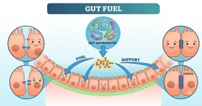 |
SCFAs – Fuel for Gut Wall: LAB produce Short Chain Fatty Acids (Butyrate, propionate). Butyrate is the main energy for your colon cells, tightens gut junctions, and prevents leaky gut. |
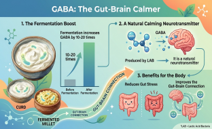 |
GABA – The Gut-Brain Calmer: Fermentation increases GABA by 10-20 times. It is a natural calming neurotransmitter produced by LAB (Lactobacilli). It reduces gut stress and improves the gut-brain connection. |
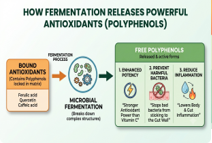 |
Free Polyphenols- Anti inflammatory substances (Ferulic acid, Quercetin, Caffeic acid): These bound antioxidants become free after fermentation. They are stronger than Vitamin C and prevent bad bacteria like Salmonella and E.coli from sticking to gut wall, and reduces inflammation. |
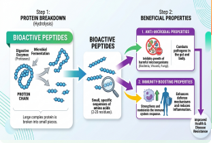 |
Bioactive Peptides- Immune boosters: Proteins are broken into small peptides that have anti-microbial and immunity-boosting properties.
|
- ENRICH YOUR DIET WITH ETHNIC GUT FRIENDLY FOODS:
Indian cuisine is naturally rich in fermented foods that support gut health, boost immunity, and aid digestion:
Idli, Dosa, & Appam Batter: Fermenting rice and urad dal breaks down complex starches and phytic acid, making B-vitamins more bioavailable and the food much easier on the stomach.
Dahi (Curd) & Chaas (Buttermilk): Packed with live Lactobacillus cultures that populate the gut, improve digestion, and help cool the body.
Kanji (Black Carrot/Beetroot Drink): A seasonal North Indian probiotic drink made with black carrots and mustard seeds, excellent for digestion and rich in antioxidants.
Pakhala / Thorani / Pazhankanji: Soaked and fermented leftover rice (popular in Odisha, Bengal and South India) that multiplies vitamin B12 and minerals overnight.
FERMENTED FOODS AS DIETARY SUPPLEMENTS.
Using fermented foods as daily dietary supplements is a simple, whole-food way to deliver live probiotics, active enzymes, and pre-digested nutrients directly to your body. Unlike hard-to-absorb synthetic vitamin pills or single-strain probiotic capsules, a small daily dose of fermented food—like a few spoonfuls of dahi or a small glass of buttermilk—provides a rich mix of friendly microbes, natural vitamins, and organic acids that work together naturally.
How to include safely?
Start with a small portion—1 small bowl of fermented millet kanji or curd daily.
Always ferment for 10-12 hours, not more than 24 hours.
Over-fermentation increases acidity and histamine.
People with severe histamine intolerance should consult a dietitian.
Home Message:
Fermented foods are the perfect example of food as medicine. They transform a simple, bland grain into a living food rich in probiotics, antioxidants, and postbiotic compounds. From our grandmother’s kitchen to modern gut health science, the message is clear—a healthy gut does not need expensive supplements; it needs a daily dose of traditionally fermented food.
FAQs
- What exactly is a fermented food?
It is exactly composed of gut-friendly microbes—probiotics (bacteria and yeast) that break down sugars and starches. Also has lactic acid, vitamins, and minerals in bioavailable form.
- Is curd from the market the same as a probiotic supplement?
Not exactly. A probiotic capsule has 1-2 specific strains in a high-concentrate dosage. A bowl of fresh homemade dahi has a diverse mix of live cultures, enzymes, and organic acids that work together naturally.
- What are the best Indian fermented foods for beginners?
Start with fresh curd set for 6-8 hours, chaas (buttermilk), and idli/dosa batter fermented for 10-12 hours. They are easy to digest and culturally familiar.
- How much should I eat daily?
1 small bowl (100-150 g) of curd or 1 small glass (150 ml) of buttermilk/millet kanji is enough as a daily supplement. Consistency matters more than quantity.
- What is the right fermentation time?
The right fermentation is also called controlled fermentation, and it is about 10-12 hours in the Indian climate that is ideal. More than 24 hours leads to over-fermentation—it becomes too sour and high in histamine and acid, which can cause acidity and bloating.
- Can people with lactose intolerance consume dahi?
Many can tolerate it better than milk. During fermentation, bacteria break down most of the lactose (milk sugar) and the proteins into a simpler form. If you have severe intolerance, start with a very small portion.
- Will fermented foods cause weight gain?
No, when taken in small portions. They are not high-calorie foods. In fact, they improve digestion and help you absorb nutrients better, which supports healthy metabolism. It is best to avoid adding lots of sugars, oil, and salt before intake.
- Who should be careful with fermented foods?
People with severe histamine intolerance, fragile immunity, or those undergoing chemotherapy should avoid or consult a dietitian first. Always use clean vessels and fresh ingredients to avoid unwanted microbes.
- Can I give fermented foods to children?
Yes. Fresh homemade curd and idli are excellent for children above 1 year. Start with 2-3 spoons. Avoid very sour kanji, strong pickles, or store-bought fermented foods for small kids.
- How to store them safely?
Fermentation needs warmth, but storage needs cold. Once fermented (10-12 hrs), keep it in the refrigerator and finish within 24 hours. Don’t leave fermented rice or curd outside for a whole day in summer—it will over-ferment. The best container for preparing and storing is mud/clay/ceramic pots.